

Your Volkswagen is designed to deliver comfort, performance, and safety every time you get behind the wheel. One of the simplest yet most important maintenance tasks is keeping your tires properly inflated. Modern Volkswagen vehicles make this easier with built-in pressure monitoring features that alert you when something needs attention. However, many drivers are unsure How to check tire pressure on the Volkswagen dashboard or what to do after the warning light appears.
In this complete guide, Auto Werkstatt explains everything you need to know about checking your Volkswagen tire pressure, understanding the TPMS, resetting the system, and maintaining optimal performance. Whether you drive a Jetta, Atlas, Taos, or another Volkswagen model, this guide will help you keep your vehicle running safely and efficiently. At Auto Werkstatt, we believe informed drivers make safer decisions, and we’re here to help every step of the way.
How to Check Tire Pressure on the Volkswagen Dashboard
If you’re wondering How to check tire pressure on a Volkswagen dashboard, the process is simpler than many drivers expect. Most modern Volkswagen models include a sophisticated pressure monitoring feature that works alongside your vehicle’s information display.
Start by parking your vehicle on a level surface. Turn the ignition on or start the engine, then navigate through the dashboard menu using the steering wheel controls. Depending on your model, you’ll find a tire pressure or vehicle status menu that displays relevant information.
Some Volkswagen vehicles display individual tire readings, while others only alert you when the pressure falls below the recommended level. Even if the dashboard doesn’t show exact numbers, it’s still important to perform a manual pressure check using a quality tire gauge.
At Auto Werkstatt, our technicians recommend checking your tires at least once a month and before any long road trip. Consistent inspections help extend tire life and improve overall vehicle safety.
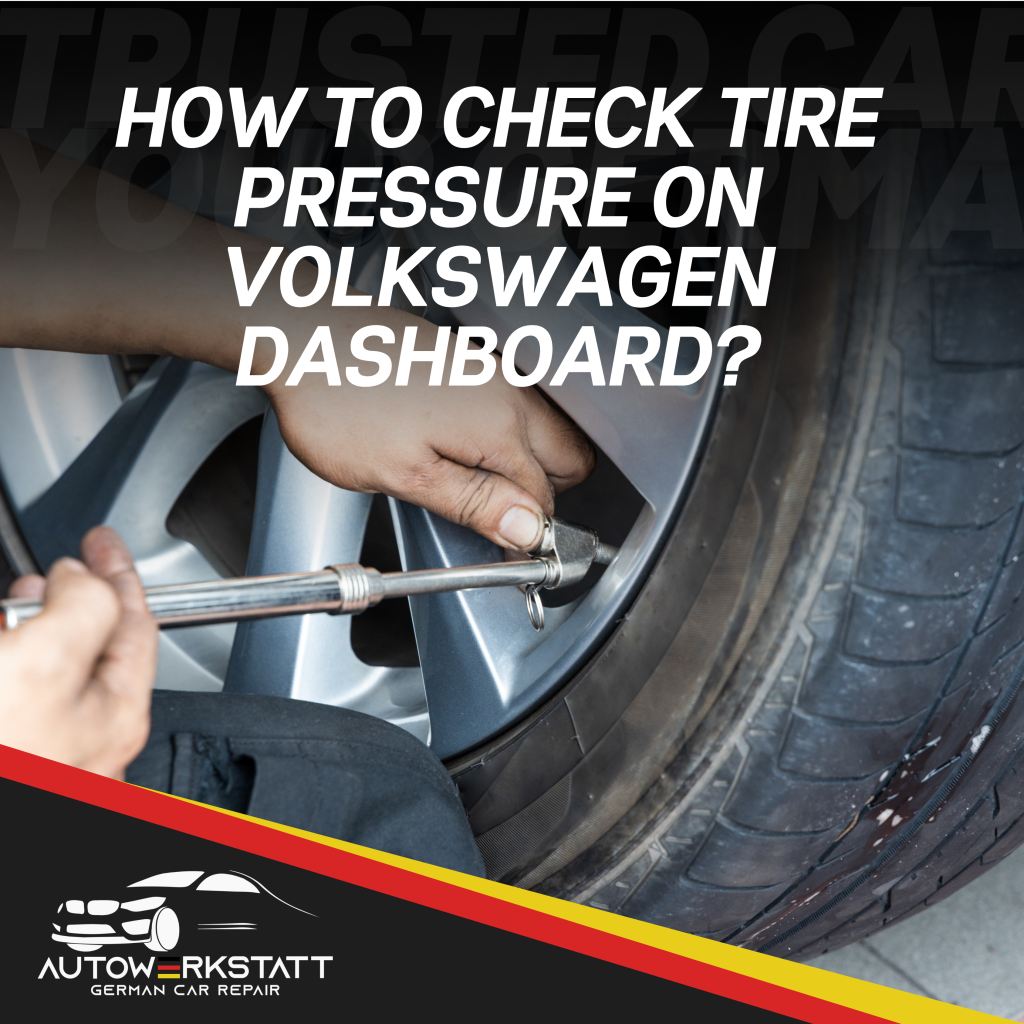
Understanding Tire Pressure Monitoring and TPMS
The TPMS stands for Tire Pressure Monitoring System. This intelligent monitoring system continuously monitors your Volkswagen’s tire pressure and alerts you whenever one or more tires lose air.
The TPMS system plays a critical role in preventing uneven tire wear, improving fuel economy, and supporting safe handling. When the tire pressure light appears on your dashboard, it usually means one or more tires require immediate attention.
Several situations may trigger the warning:
- Seasonal temperature changes reduce air pressure
- A slow puncture or small leak
- Recently replacing or rotating tires
- Incorrect inflation after routine maintenance
- Sensor calibration after a repair
Ignoring the warning can lead to reduced braking performance, uneven tread wear, and lower fuel efficiency. That’s why Auto Werkstatt encourages drivers to respond promptly whenever the warning light appears.
Why Proper Tire Pressure Matters for Every Volkswagen
Maintaining the correct Volkswagen tire pressure offers benefits that go far beyond avoiding a dashboard warning. Every Volkswagen is engineered to perform best when the tires meet the manufacturer’s recommended specifications.
Properly inflated tires help improve steering response, reduce stopping distance, and promote even tread wear. They also minimize rolling resistance, allowing your engine to operate more efficiently.
Whether you drive a Volkswagen Taos, Atlas, Jetta, or another model, proper inflation contributes to:
- Better fuel economy
- Longer tire lifespan
- Improved ride comfort
- Enhanced cornering stability
- Safer braking performance
At Auto Werkstatt, we often see premature tire wear caused simply by neglected pressure maintenance. Spending a few minutes each month on a routine tire inspection can save significant repair costs later.
Step-by-Step Tire Pressure Check Before Driving
A proper pressure check begins before you even start the engine. Tires should always be checked when they are cold because driving increases air pressure due to heat.
Locate the recommended inflation values on the driver’s door jamb sticker or in your owner’s manual. Do not rely on the maximum pressure printed on the tire sidewall.
Remove the valve cap, attach a reliable pressure gauge, and compare the reading with Volkswagen’s recommendation. Add or release air until the correct level is reached.
Repeat this process for every tire, including the spare if your vehicle includes one.
Once all tires have been adjusted, inspect them for uneven wear, embedded objects, or visible damage. If anything seems unusual, professional tire service is recommended before continuing to drive.
The technicians at Auto Werkstatt perform comprehensive tire inspections that go beyond simple air pressure adjustments to help keep your Volkswagen operating safely.
TPMS Reset and Reset Button Explained
After correcting the air pressure, many drivers notice the warning light remains on. This usually means a TPMS reset is required.
The exact procedure varies among Volkswagen models, but most follow a similar process. Some vehicles include a dedicated reset button, while others perform the reset through the infotainment menu.
Typically, you’ll:
- Inflate all tires to the recommended specification.
- Turn the ignition on.
- Access the vehicle settings menu.
- Select Tire Pressure or Tire Monitoring.
- Confirm the reset procedure.
- Drive for several minutes while the system recalibrates.
If your Volkswagen has a physical reset button, press and hold it until the indicator blinks or a confirmation message appears.
If the warning remains illuminated after performing a TPMS reset, one of the sensors may require diagnosis or replacement. Auto Werkstatt has the specialized equipment needed to accurately inspect and calibrate the TPMS.
Volkswagen Models That Feature Advanced Pressure Monitoring
Today’s Volkswagen models feature increasingly advanced pressure-monitoring technology designed to improve driver confidence.
Popular vehicles equipped with these systems include the Taos, Atlas, Jetta, Tiguan, Golf, Passat, and many others.
Although each model has slightly different dashboard menus, the overall purpose remains the same: helping drivers quickly determine when tire pressure falls below safe operating levels.
Some premium models even display individual tire readings in real time, making it easier to identify which wheel needs attention.
At Auto Werkstatt, our technicians regularly service every major Volkswagen model and understand the unique calibration requirements for each monitoring system.
Common Tire Pressure Light Problems and Solutions
Sometimes the pressure light stays on even after the tires are adjusted correctly. This doesn’t always indicate a major repair, but it should never be ignored.
Common causes include low battery power in a TPMS sensor, sensor damage during tire replacement, recent wheel installation, or electronic calibration issues.
Temperature changes can also temporarily activate the tire pressure light during colder mornings because air contracts as temperatures drop.
If you’ve already completed a thorough check, performed a TPMS reset, and verified all inflation levels, then a professional diagnosis is the next step.
Experienced technicians at Auto Werkstatt can inspect sensors, verify readings, and identify any hidden issues before they become more expensive repairs.
When Professional Tire Service Is the Best Choice
While checking air pressure at home is straightforward, some situations require professional attention. Uneven wear, repeated pressure loss, damaged sensors, or wheel alignment problems should always be evaluated by trained technicians.
A professional tire service includes far more than simply adding air. It may involve balancing, rotation, alignment inspection, sensor testing, and evaluating the condition of important parts that support safe driving.
Routine service appointments also help identify small problems before they affect the suspension, braking system, or overall vehicle handling.
Choosing experienced Volkswagen specialists ensures every component, from the Volkswagen tire sensors to the electronic system, functions exactly as designed.
That’s why so many Volkswagen owners trust Auto Werkstatt for preventive maintenance, diagnostics, repairs, and complete tire care.
Keep Your Volkswagen Ready for Every Journey
Knowing How to check tire pressure on the Volkswagen dashboard is one of the easiest ways to protect your investment and improve driving safety. Regular monitoring, prompt attention to warning lights, and proper maintenance help maximize tire life while ensuring your Volkswagen performs exactly as it was engineered to.
Whether you drive a family-friendly Atlas, a stylish Jetta, or a versatile Taos, maintaining proper Volkswagen tire pressure should always be part of your regular maintenance routine.
At Auto Werkstatt, we’re committed to helping every Volkswagen owner enjoy safer, smoother, and more reliable driving through expert inspections, professional maintenance, and trusted automotive care.
Contact Us
When your Volkswagen deserves expert care, trust Auto Werkstatt to keep it performing at its best. From professional tire inspections and TPMS diagnostics to complete maintenance and repairs, our experienced team is ready to help. Schedule your next service with Auto Werkstatt and experience dependable workmanship, honest advice, and exceptional customer care every time you visit.
