
The automotive industry is full of familiar names, but not every brand operates independently. Audi and Volkswagen are two excellent examples of how different car manufacturers can share the same corporate family while maintaining their own identities, designs, and driving experiences. Although both brands have distinct reputations, they are closely connected through the Volkswagen Group.
So, are Audi and Volkswagen the same company? The short answer is no, but they belong to the same larger automotive organization. Understanding this relationship can help car owners make better decisions about vehicle purchases, maintenance, parts, and long-term ownership. At Auto Werkstatt, we believe that informed drivers are better equipped to care for their vehicles, which is why understanding automotive brands and their connections matters.
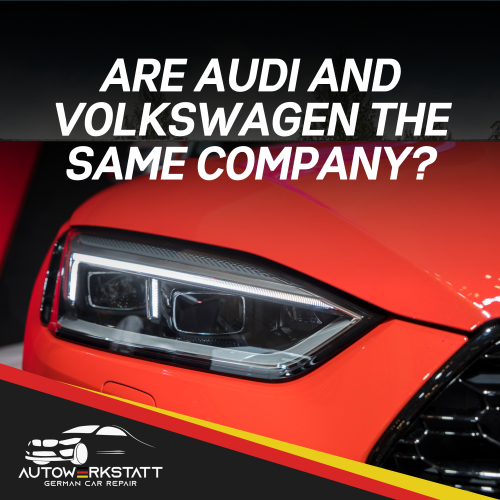
Are Audi and Volkswagen the Same Company or Separate Brands?
Audi and Volkswagen are not the same car brand. They operate under separate brand identities, offer different vehicle lineups, and target different segments of the automotive market. However, both are part of the Volkswagen Group, a major international automotive organization.
Volkswagen is widely recognized for producing practical, comfortable, and accessible vehicles for everyday driving. Audi, on the other hand, is positioned as a premium manufacturer, emphasizing sophisticated styling, advanced technology, refined interiors, and performance-oriented engineering.
Despite these differences, their corporate connection means they share certain resources, technologies, and development processes. Each brand maintains its own identity while benefiting from the larger group’s capabilities.
For car owners, this distinction is important. An Audi is not simply a Volkswagen with a different badge. It has its own engineering characteristics, equipment options, performance features, and maintenance requirements.
Understanding the Volkswagen Group and Its Global Presence
The Volkswagen Group is the parent automotive organization that brings Audi and Volkswagen together. It oversees several well-known vehicle manufacturers and coordinates their broader business activities.
Its portfolio includes brands serving different customer expectations, from everyday transportation to luxury and high-performance vehicles. This structure allows the organization to compete across multiple automotive segments without making every brand offer the same type of car.
The group’s international presence also supports large-scale production, research, technological development, and distribution. By coordinating resources across its brands, the Volkswagen Group can improve efficiency while maintaining different market identities.
For investors, the group’s performance involves more than the sales figures of one manufacturer. Financial results, production costs, global demand, and individual brand performance all contribute to the wider business picture.
How Group Strategy Keeps Audi and Volkswagen Connected
A shared corporate structure allows Audi and Volkswagen to follow broader organizational objectives while maintaining individual brand strategies.
The Volkswagen Group establishes priorities involving innovation, production efficiency, technology, sustainability, and market expansion. Individual brand management teams then apply these priorities according to their customers and market positions.
For example, Audi may focus on premium technology, luxury comfort, and performance-oriented development. Volkswagen may concentrate on accessible mobility, practical vehicle features, and value across a wider customer segment.
This group strategy provides several advantages:
- Shared research: Both brands can benefit from developments in engineering, software, safety, and vehicle technology.
- Production efficiency: Coordinated manufacturing resources can help control development and production costs.
- Technology development: Investments in electric mobility and digital systems can support multiple brands.
- Market positioning: Each manufacturer can concentrate on its own audience while benefiting from the larger organization.
This approach helps the Volkswagen Group remain competitive without removing the individual characteristics that make each brand recognizable.
Why Audi and Volkswagen Share Parts and Technology
One of the most interesting aspects of the relationship between Audi and Volkswagen is their use of shared engineering resources. Drivers may be surprised to discover that certain vehicles from both brands use related mechanical components, electronic systems, or underlying vehicle architectures.
The reason is simple: developing every component separately would require considerable investment. By sharing suitable parts and engineering solutions, manufacturers can reduce costs, streamline production, and improve development efficiency.
However, sharing parts does not mean that every component is interchangeable. Different models can have different engine configurations, suspension systems, braking components, software versions, and equipment specifications.
Even when two vehicles use a similar platform, their driving characteristics may be noticeably different. Audi may incorporate premium materials, specialized suspension tuning, advanced infotainment features, or performance-focused equipment.
At Auto Werkstatt, understanding these differences is essential when assessing a vehicle’s service requirements. Choosing the correct replacement part requires attention to the exact make, model, year, engine, and manufacturer specifications.
Shared Platforms | What They Mean for Audi and Volkswagen Cars
A shared platform is an underlying vehicle architecture used to develop different models. It can include important structural elements and engineering arrangements that manufacturers adapt for multiple vehicles.
The Volkswagen Group uses modular platform strategies to support different cars across its brand portfolio. One well-known example is the MQB platform, which has been used in various Volkswagen Group vehicles.
This approach allows manufacturers to develop vehicles with different dimensions, body styles, interiors, and driving characteristics while using a common engineering foundation.
For example, two vehicles may share certain platform components but have completely different exterior styling and cabin designs. Their engines, transmissions, suspension settings, and technology packages may also vary.
Shared platforms offer practical benefits, including more efficient production, coordinated engineering, and opportunities to introduce new technology across several models.
Nevertheless, car owners should never assume that a part designed for one Volkswagen model will automatically fit an Audi. Compatibility must always be checked using the correct vehicle identification information and manufacturer specifications.
Audi Brand and Volkswagen Brand: Different Driving Experiences
Although they belong to the same corporate group, Audi and Volkswagen appeal to different customer expectations. Their product strategies reflect the needs of their respective audiences.
The Volkswagen brand generally focuses on practical transportation, comfort, everyday usability, and accessible automotive technology. Its cars are designed to serve a broad range of drivers, including families, commuters, and individuals seeking dependable daily transportation.
Audi occupies a more premium segment. Its vehicles commonly emphasize refined cabin materials, sophisticated exterior styling, advanced driver assistance systems, and a more luxurious driving experience.
Some key differences include:
- Interior design: Audi models often feature premium finishes and more elaborate cabin technology.
- Performance options: Audi offers several performance-focused models and configurations.
- Technology: Both brands offer modern features, but their availability and presentation vary by model and trim.
- Market segment: Volkswagen generally serves a broader mainstream audience, while Audi targets premium vehicle buyers.
These differences demonstrate why brand identity remains important even when manufacturers share corporate ownership and engineering resources.
Financial Performance, Investors, and Corporate Responsibility
The Volkswagen Group’s business operations extend beyond vehicle design and production. Its financial planning, investor relations, environmental goals, and corporate governance all influence how its brands develop.
Audi and Volkswagen contribute to the group’s overall business activities through their individual sales, product strategies, and market performance. Investors pay attention to factors such as revenue, profitability, production expenses, vehicle demand, and future investment plans.
Sustainability has also become an important part of the automotive industry’s direction. Manufacturers are investing in electric vehicles, battery technology, energy efficiency, and more responsible production processes.
Environmental, social, and governance (ESG) considerations are increasingly relevant to these efforts. Environmental initiatives address emissions and resource consumption, while social responsibilities include workplace practices and community engagement. Governance focuses on transparency, accountability, and responsible management.
These priorities help shape the group’s long-term strategy and influence the direction of its different automotive brands.
What This Relationship Means for Vehicle Maintenance and Service
For vehicle owners, understanding the relationship between Audi and Volkswagen can be useful when arranging maintenance or repairs. Shared engineering may create similarities between certain models, but each vehicle still requires service based on its specific design and manufacturer recommendations.
Routine maintenance should include appropriate oil changes, brake inspections, tire checks, fluid replacements, and diagnostic assessments. Following the correct service schedule helps protect important components and supports reliable vehicle performance.
Audi vehicles may also feature specialized electronics, advanced driver assistance technology, and premium equipment that require appropriate diagnostic knowledge. Volkswagen models have their own technical requirements depending on the vehicle and configuration.
At Auto Werkstatt, we understand that proper automotive service begins with understanding the vehicle rather than making assumptions based on its parent company. Whether a customer owns an Audi or Volkswagen, accurate diagnostics, suitable replacement components, and careful workmanship are essential for maintaining vehicle condition.
Choosing an experienced automotive service provider can help identify potential problems early, prevent unnecessary repairs, and support long-term vehicle reliability.
Making the Right Choice Between Audi and Volkswagen
Deciding between Audi and Volkswagen ultimately depends on your budget, driving habits, preferences, and expectations. Both manufacturers offer a range of vehicles, but their priorities and market positions are different.
Drivers who value practical features, everyday comfort, and a broad selection of mainstream vehicles may find Volkswagen appealing. Those who prefer premium interiors, sophisticated technology, and a more luxurious driving experience may be drawn to Audi.
It is also important to consider the overall cost of ownership. Purchase price, fuel consumption, insurance, replacement parts, and regular maintenance can all influence your long-term expenses.
Before purchasing either vehicle, research the specific model rather than relying solely on its brand reputation. Compare available features, check its maintenance history, and arrange a professional inspection when buying a used car.
Auto Werkstatt encourages drivers to look beyond the badge and understand what their chosen vehicle needs to remain dependable. A well-maintained car can provide a more satisfying ownership experience, regardless of whether it carries an Audi or Volkswagen emblem.
Two Brands, One Automotive Family
Audi and Volkswagen are separate automotive brands, but their connection through the Volkswagen Group brings them together through shared resources, technology, and corporate management. While they may use related platforms and components, they continue to offer different designs, driving experiences, and market positions.
Understanding this relationship makes it easier to appreciate the differences between the two manufacturers and recognize why correct vehicle maintenance remains important. Whether you drive a premium Audi or a practical Volkswagen, quality service and attention to manufacturer specifications can make a meaningful difference.
Your vehicle deserves expert attention, not guesswork. Contact Auto Werkstatt for professional automotive service and maintenance solutions designed around your vehicle’s specific needs. Let our commitment to quality workmanship help you enjoy greater confidence every time you get behind the wheel.
